


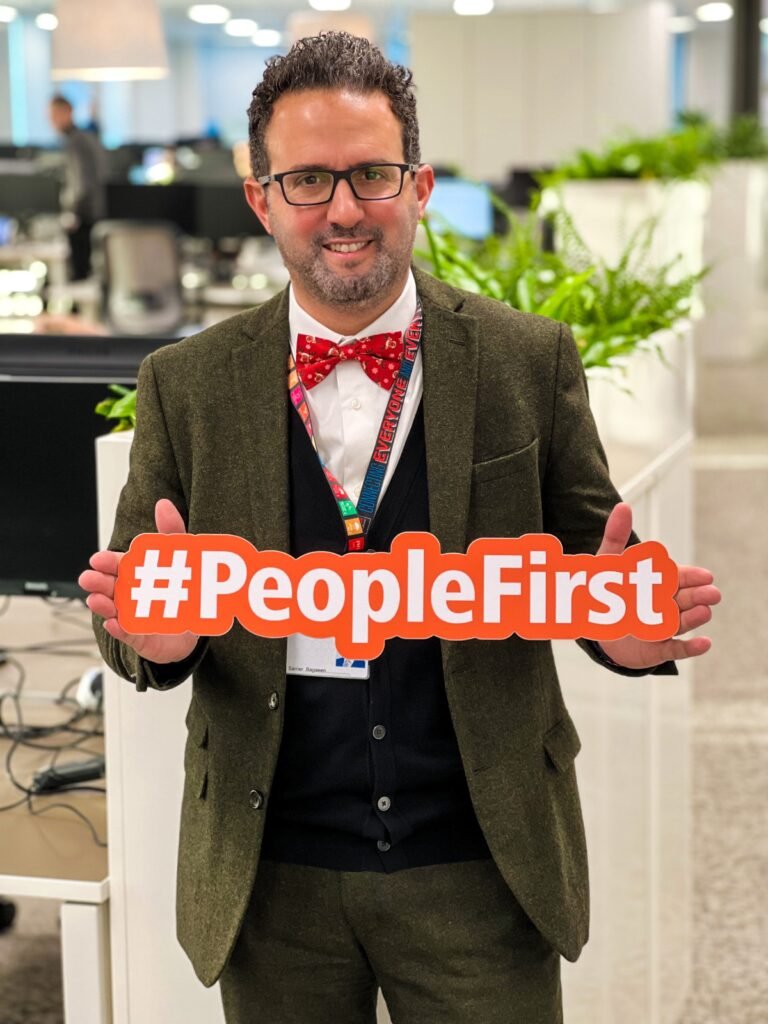
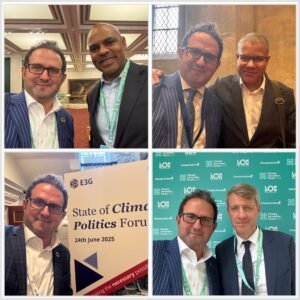
Professor Samer Bagaeen FRTPI FRICS FICE FRSA FRGS is one of the UK’s most versatile and influential voices in Planning and Sustainable Development. Now a Technical Director in Arcadis’s Environmental Planning team, he brings together deep technical expertise, international experience, and a long record of public service. His career spans senior roles in global resilience initiatives, including 100 Resilient Cities (now the Resilient Cities Network), where he worked with leaders across Milan, Barcelona, Rome, Lisbon, Amman and beyond; academic appointments such as Professor of Planning & Resilient Systems at the University of Kent and more recently as Head of the School of Town Planning at the University of the Built Environment; and advisory and governance roles across the RTPI, TCPA, the G20’s Global Infrastructure Hub, the Design Council and the City of London.
Alongside his professional work, Samer has served as an elected councillor for Brighton & Hove since 2019, contributing to Climate, Transport, Health and Sustainability agendas, and remains an active advocate for Diversity and Inclusion within the built-environment sector. Recognised with multiple EDI awards and the Freedom of the City of London.
Thank you, Samer, for paying us a visit, and congratulations on your appointment as Vice President Elect of the RTPI!

“Can you share your career journey and how you arrived at your current position?”
My path to the RTPI Vice Presidency has been a long but rewarding one. I first entered the Institute’s governance structure 14 years ago, winning election to the General Assembly – a body that debates key issues and holds the Board of Trustees to account. I served four years there before being elected to the Board of Trustees in 2016, completing a two-year term while juggling my role with the Rockefeller Foundation.
After stepping back in 2017, I returned to the General Assembly in 2019 for two further terms, followed by another three-year term on the Board, which concludes this December. Along the way, I chaired the International Committee and the Policy, Research and Practice Committee, and spent five years on the Town and Country Planning Association’s Board.
I first stood for RTPI Vice President some years ago. Although I didn’t secure the role then, I stood again this year and was elected. My Vice-Presidential term begins in January, marking the start of a three-year commitment: one year as Vice President, one as President, and one as Immediate Past President.
“Were there massive differences in terms of the Planning systems compared to Jordan? How did you adjust in the beginning?”
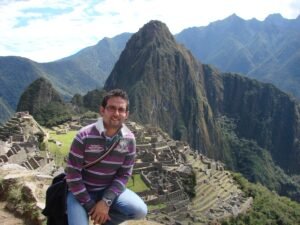
Most of my planning knowledge was shaped here in the UK, even though I’ve worked internationally – including a memorable stint in Peru in 2009, where on my first day I was whisked off to Machu Picchu. My formal background is in architecture, urban design, and later a PhD in Planning, so I hadn’t studied the UK system at university. I had to learn it quickly, largely while teaching it, especially after helping to set up the Planning School in Brighton in 2008 with seed funding from the then Department of Communities and Local Government.
The Jordanian system has British roots, particularly in land allocation, so there’s a degree of familiarity. But in practice it functions quite differently, and there are aspects of the process that can be easily worked around, which doesn’t always lead to the best outcomes.
Working with cities through the Rockefeller Foundation, from Milan and Rome to Barcelona, Lisbon, Tbilisi and Amman, gave me a broader understanding of how planning systems operate on the ground. Seeing how different political structures – from Elected Mayors to City Managers – shape decisions was invaluable.
Ultimately, most of my adjustment came from observing systems in action and staying on top of the rapid policy changes in England after 2008, especially while teaching new cohorts of planners. It’s been a constant process of learning by watching and learning by doing.
“How did you find them adjusting to England?”
The biggest shift wasn’t cultural, it was understanding how the planning system works here. In Jordan, planning is still rooted in older British and French frameworks, but the reality on the ground is quite different: land-use decisions often come first, infrastructure arrives later, and cities grow at a pace the system was never designed to handle. Amman, for example, expanded from around half a million people in the 1980s to more than five million today, creating fragmented neighbourhoods and infrastructure gaps.
By contrast, the UK system is far more process heavy. Every development draws in a network of utilities, emergency services, regulators and consultees. The challenge here isn’t unchecked growth; it is getting well-planned developments delivered in the right places, with the right services.
So, my adjustment mainly involved learning a very different planning culture: one focused on coordination and compliance, rather than retrofitting and rapid expansion. Seeing multiple systems up close in Jordan, across Europe through my Rockefeller work, and in the UK helped me understand how cities adapt to their own pressures, and how planners navigate those structures in real time.
“Did you encounter any major turning points or obstacles during your career progression?”
My career has taken more turns than I ever expected. After studying in the UK, I returned to Jordan to teach, then shifted into NGO work in Jerusalem, a role that ultimately led me to pursue a PhD in London. From there, I went back to Jordan to help redevelop former military brownfield sites, before another pivot took me to Scotland. I spent five years in Glasgow working on a UK-funded Urban Sustainability project and worked at the then Aberdeen Planning School, before moving on to Brighton and later into global work with the Rockefeller Foundation. That period had me travelling almost constantly.
When the project ended, I returned to academia at the University of Kent, and today I divide my time between Arcadis, the University of the Built Environment, and roles within professional bodies such as the RTPI and RICS. Alongside that, I’ve served two terms as a Local Councillor in Brighton – an eye-opening experience, but one I don’t plan to extend into a third term.
In the two years I spent lecturing at Aberdeen, during a last effort to revive its Planning School, I was commuting from Glasgow, mostly with offshore workers heading back from the rigs on the train. Ultimately, the accredited school couldn’t be saved, but it was an interesting chapter.
“What are the common career trajectories in this field?”
Broadly, planning careers fall into three paths. First, academic planners -most stay in universities and don’t typically practise. Then there are public-sector planners, who tend to stay within local authorities, moving between councils when a step up requires it. And finally, private-sector practitioners, who often move between major consultancies but rarely cross over from public to private or vice versa.
The split between public and private has shifted dramatically. Ten years ago, RTPI membership was roughly 75% public-sector; today it’s nearly 50/50. Private firms now deliver a huge amount of work for local authorities, yet senior public-sector roles almost always go to people already inside the system. That lack of cross-pollination isn’t always healthy, especially when reliance on expensive interim appointments is rising.
Neither sector is particularly cosy. Both face pressures – financial, organisational, political – and both have strengths and weaknesses. What’s clear is that the Built-Environment sector as a whole needs talent. A recent study suggested the UK needs around 170,000 new entrants each year to meet its Housing and Infrastructure ambitions. With technology and AI rapidly evolving, we still don’t know where those people will come from, or how the work will change. AI will reshape processes, certainly, but outcomes still depend on people. That’s why, in our new planning curriculum at the University of the Built Environment, we prioritise outcomes over process and integrate technology in ways that actually help future practitioners.
As for teaching, yes, planners who’ve worked across sectors are rare in academia. Having moved through public practice, private consultancy, academia and international philanthropy, I bring a mix of lenses that students tell me they find valuable. Real-world experience changes how you talk about planning committees, political dynamics, design challenges – things that don’t come from textbooks. Blending theory with lived practice has always been at the heart of how I teach.
“What is it like working for the RTPI?”
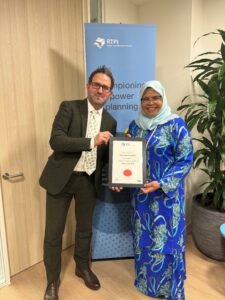
Work with the RTPI is entirely voluntary, which means any contribution from chairing a committee, shaping a strategic agenda, or engaging with members feels meaningful. Recognition often comes through re-election or being asked to take on new responsibilities. I was recently awarded Fellowship of the Institute, which was a very welcome honour. Moments like that remind you why you give your time: it’s a chance to support and strengthen the profession.
I’ve got three more years with the Presidential team, and what I’m most looking forward to is the Presidential year itself. The Institute is entering a period of transition – a new Chair of the Board, a new Chief Executive, and a rapidly shifting political and technological landscape. Technology will play a significant role in what comes next, and I’m keen to work closely with new colleagues and across the wider planning environment as we navigate those changes.
“How much of it is shaping the future of planning for tomorrow?”
A significant part of it is forward-looking. One of my priorities is helping the profession understand how technology can support planners rather than replace them. Every discipline across the built environment is grappling with rapid technological change, so planning can’t address these challenges in isolation. Collaboration with other professional bodies will be essential during my Presidential year – bringing our sectors together in a way that reflects the systems-based approach we teach.
Predicting exactly what technology will look like by 2027 is impossible; it’s evolving too quickly. What we can do is build strong partnerships with both built-environment professions and the tech sector, ensuring planners have a meaningful voice in shaping tools and policy. The risk is that the agenda becomes dominated by large tech companies or property-tech firms, whose focus is often efficiency rather than outcomes. Planning leadership should come from built-environment professionals – the people responsible for improving places, not just streamlining processes.
Efficiency has its place, but it doesn’t always lead to better results. Being outcomes-focused, rather than driven purely by speed, is ultimately what creates lasting value for communities.
“How has the industry changed since you started? And what is the current state of the industry?”
In many ways, the fundamentals of planning haven’t shifted dramatically over the last few decades. What has changed is the makeup of the workforce. The age profile is rising across several built-environment professions; Building Control Officers, for example, now average around 52. Without a pipeline of new entrants, some roles could face serious shortages within a decade.
Politically, the landscape shifts constantly. Policy swings, new ministers, changing priorities – those forces shape planning more than the industry reshapes itself. Curriculum has evolved, though; climate change and sustainability now sit at the core of planning education in a way they simply didn’t 20 years ago. At postgraduate level, where I teach, conversion courses continue to draw people from other disciplines looking for a meaningful mid-career shift.
“What’s the best/worst career decision you’ve ever made?”
Turning down a PhD in the United States. I chose London instead of Texas A&M, and while it wasn’t a bad decision, I’m still curious about how differently things might have unfolded if I’d gone down the American route.

“What’s next for you and your career steps?”
Consolidation. Strengthening my work in the private sector, continuing to build the University of the Built Environment, and keeping focus on the next three years with the RTPI Presidential team.
“What are the next big things we can expect to see from the RTPI?”
The major milestone ahead is the RTPI’s 2030 Strategic Plan. It will shape the Institute’s direction and priorities for the rest of the decade.
“What’s the best piece of advice you have for someone looking to move into Planning?”
Planning is one of the most rewarding career choices you can make. You work directly with communities, politicians and stakeholders; you shape environments, influence infrastructure, and solve real problems. Few professions offer that breadth.
“What advice would you give to someone, such as a younger Planner, who wants to secure a role within the industry?”
Get as much varied experience as you can. Move between public and private sectors, change employers, learn different approaches, and expose yourself to a wide range of projects. That early breadth of experience is where the real learning happens, and it pays off for the rest of your career.
Samer Bagaeen https://www.linkedin.com/in/samerbagaeen/
RTPI https://www.rtpi.org.uk/
BAME Planners Network https://www.bameplanners.org/
University of the Built Environment https://www.linkedin.com/school/university-of-the-built-environment/
Arcadis https://www.arcadis.com/en-gb