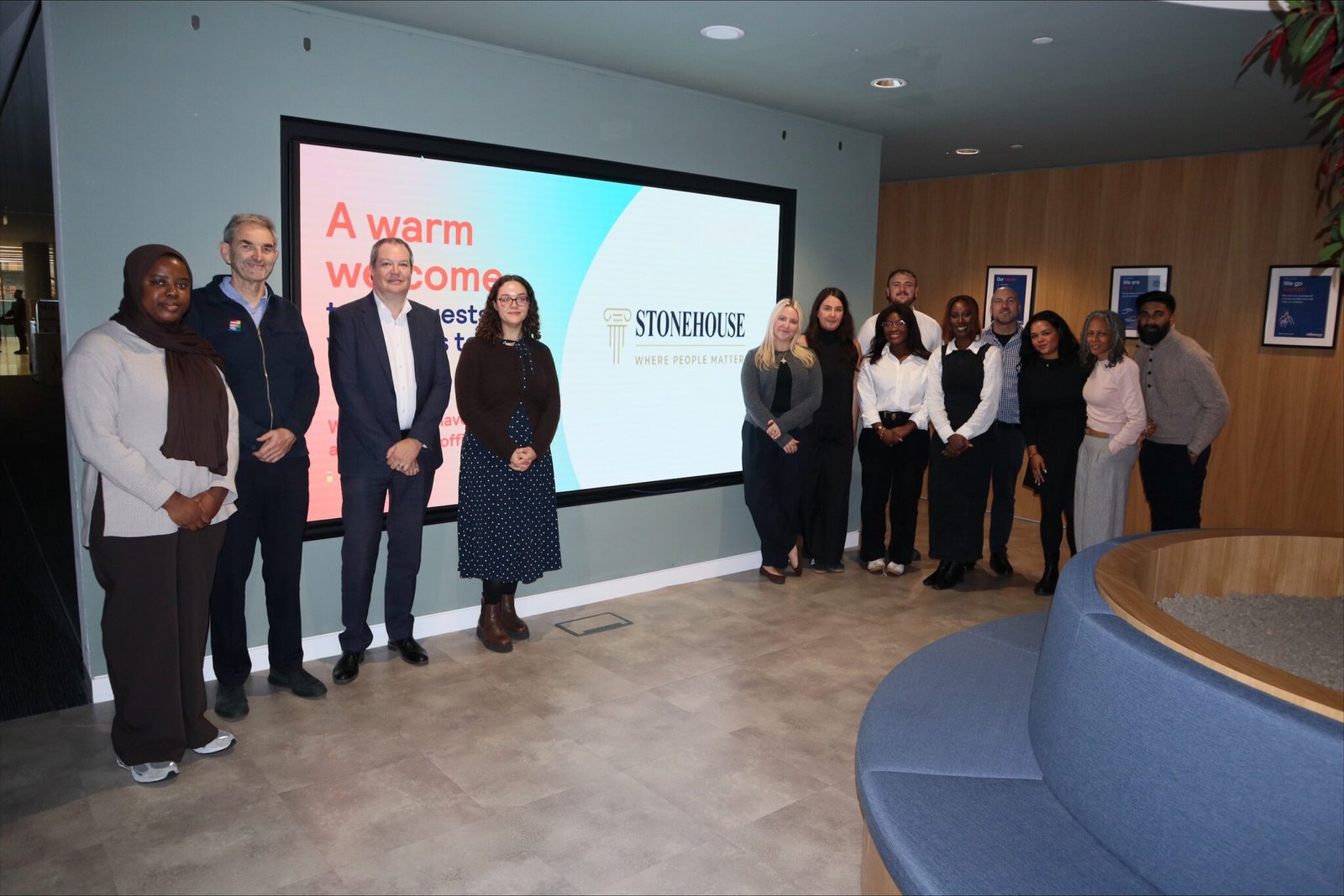
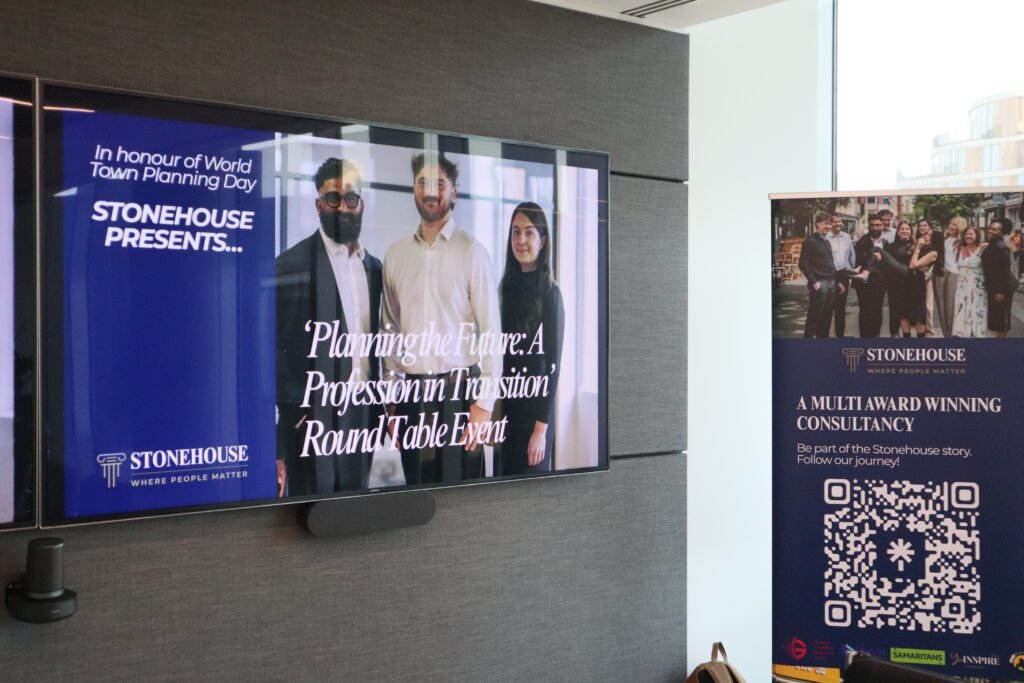
On Friday 13 November 2026, Stonehouse Recruitment Group’s Town Planning team brought together planning professionals from across London for its first-ever Town Planning Round Table, marking World Town Planning Day 2026.
Bringing together individuals from director level through to the next generation of young planners, the discussion created an opportunity to share experiences and explore some of the biggest questions facing the planning profession.
With Local Government Reorganisation (LGR), artificial intelligence (AI) and emerging planning technology high on the agenda, the round table was designed to encourage an open conversation between professionals at different stages of their careers, recognising that the future of planning will be shaped by a range of voices.
With Local Government Reorganisation set to reshape the landscape of local government across England, its implications for planning departments and their people formed a significant part of the discussion.
A key question emerged: does a larger authority necessarily mean a better planning service?
There was considerable discussion around the advantages of smaller councils, particularly the flexibility, autonomy and closer working relationships they can offer. Participants highlighted how smaller teams can often resolve problems more quickly, with fewer approval stages and a greater sense of trust between colleagues.
By contrast, concerns were raised about whether larger authorities risk introducing additional layers of approval and reducing individual autonomy, many voiced smaller authorities create close-knit working environments. While greater scale may bring opportunities for strategic planning and shared resources, it also raises questions about how existing expertise and professional relationships will be retained.
The conversation also turned to the people responsible for leading these changes. How can authorities maintain their strongest planning talent throughout a period of uncertainty? What will successful integration look like? And how can recruitment strategies adapt to a changing local government landscape?
An interesting discussion developed around leadership and risk. While perspectives differed, there was recognition that a willingness to take calculated risks can be an important ingredient in professional development and organisational progress.
One particularly strong takeaway was the importance of recruiting for attitude over experience. Technical knowledge can be developed, but curiosity, initiative and the right attitude are much harder to teach.
This is an approach that resonates strongly with Stonehouse. As Director Sohan Modi highlighted, these qualities are central to how Stonehouse assesses potential consultants throughout its recruitment process. Beyond experience and technical capability, understanding an individual’s attitude is essential to identifying people who will deliver the highest level of service to clients and candidates.
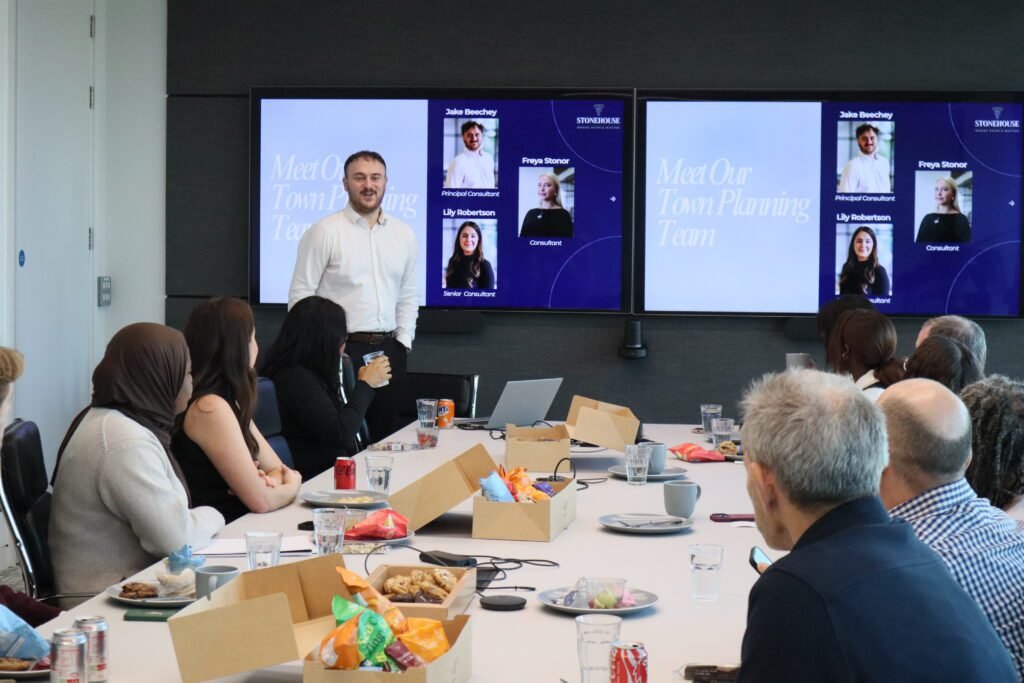

Artificial intelligence and digital planning technology provided another major talking point, reflecting the pace of change across the profession.
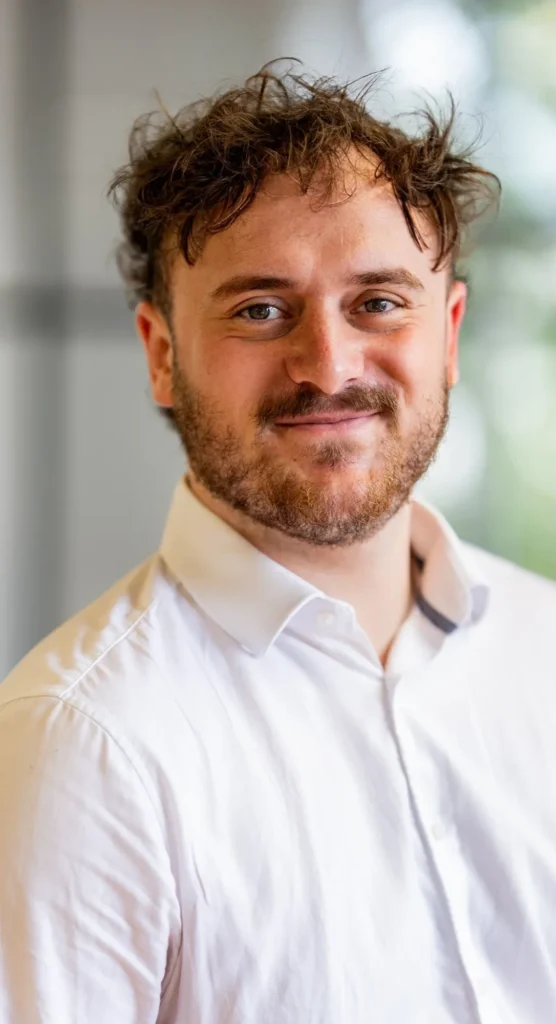
The subject was of particular interest to Stonehouse’s Town Planning team following Jake Beechey’s attendance at the RTPI Young Planners Conference, where discussions around digital planning, AI and emerging technology sparked further interest in how these developments could influence the future of planning.
The round table explored whether AI could genuinely improve the efficiency of planning departments, whether certain roles would evolve or disappear, and how much responsibility should be placed on those using and implementing these technologies.
One of the most thought-provoking questions came from the leadership discussion: Are we still upskilling our people, or are we simply teaching them how to use AI?
There was a shared recognition that, while AI can be a valuable tool, independent thinking and the ability to bring a unique perspective remain essential. Technology may help planners work more efficiently, generate ideas and explore different approaches, but it cannot replace the experience and accountability that underpin sound planning decisions.
Younger professionals agreed with the importance of maintaining independent judgement, while also highlighting the potential for AI to be used as a brainstorming tool and alongside their own thinking. Rather than viewing the technology as a replacement for professional expertise, they saw an opportunity to use it to complement and strengthen their work.
This difference in perspective made for an especially valuable discussion. It demonstrated how conversations between generations can challenge assumptions and provide a more balanced understanding of technological change.
The group also considered whether planning authorities are sufficiently prepared for the changes ahead, including the potential for technology to improve public engagement and make planning processes more accessible.
Ultimately, the conversation returned to one important consideration: how much responsibility lies with the people using the technology, and those responsible for implementing it?
As AI becomes increasingly integrated into professional environments, the importance of human judgement, accountability and the ability to question the outputs of technology will only grow.

One of the most valuable aspects of the round table was the opportunity to hear from professionals with different levels of experience and perspectives.
From senior leaders navigating organisational change to young planners entering an increasingly technology-driven profession, the discussion highlighted the importance of bringing people together to share knowledge and challenge established ways of thinking.
For Stonehouse, hosting the first Town Planning Round Table was an opportunity to do exactly that.
As we working closely with the public sector and the town planning profession, we believe meaningful conversations about the industry’s future must include the people who are shaping it every day.
World Town Planning Day provided the perfect opportunity to bring those voices together, and we look forward to continuing the conversation.
At Stonehouse, we believe the future of planning starts with its people. Thank you to the incredible industry professionals who joined us on Friday, and made our first planning round table so special. It was a pleasure to host you.