
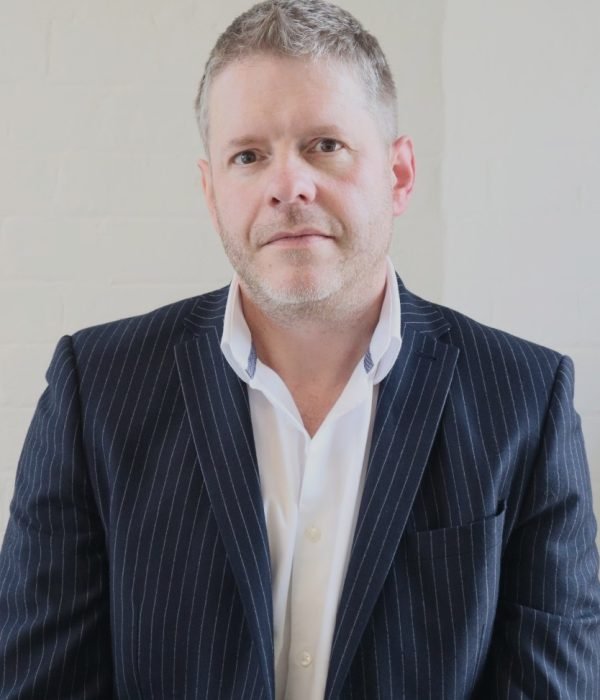
Behind every public service is a team of people working to make a difference. For Liam Mooney, Trading Standards Manager, that has meant a career spanning around 25 years,.
Having worked across animal health, food law, product safety, fair trading and doorstep crime, Liam has seen first-hand how the profession has evolved. Today, his focus is on bringing people together, making the most of limited resources and ensuring his team has the support to do its job effectively and safely too.
We spoke to Liam about the experiences that have shaped his career, the realities of leading a modern Trading Standards service and the changes he believes are needed to protect consumers and support the people on the front line. Thank you, Liam, for taking the time to come in and visit us, as well as allow us to interview you!
I never knew what I wanted to do and envied those that did. I finished my A levels and saw an advertisement for an Operational Assistant role at Oxfordshire Trading Standards. At the time of joining foot-and-mouth disease was kicking off and I quickly became an emergency / unofficial Animal Health Officer. It was a very stressful time for the farming community and challenging for a new officer, but it gave me the foundations I needed for a career in regulation. The ability to convey often complex legislation in difficult circumstances. The ability to support people at a very difficult time in their life. From there I moved into food law, then product safety and fair trading, before eventually specialising in doorstep crime and fraud (where I stayed and specialised).
We’re constantly having to prioritise and where resources have decreased, our threshold for taking action has had to do so also. We prioritise cases where there is significant financial, physical and / or mental harm and particularly where vulnerable consumers are concerned. I would definitely like to be able to investigate more / other quite serious offences but we just aren’t able to progress every reported incident.
I think we’ve moved away from proactive checking and market surveillance towards a more reactive response to incidents – and those incidents are becoming more serious in nature. We’re dealing more with doorstep crime, rogue traders and fraud more generally. It’s got a bit riskier, a bit more challenging and maybe a bit more interesting, depending on how you look at it.
I think rogue trading cases present probably the biggest challenge for investigators. You’re dealing with offenders who can be very clever and are actively trying not to be found, so pursuing them is complex. It’s not just proving the offence but finding them and bringing them before the court.
In terms of the overall scale of the problem, illicit tobacco is probably the biggest challenge at the moment. It’s fair to say it’s increased dramatically in recent years – and we’ve had to play catch up with diminished resources. Trading Standards now has a fresh and significant intake of tobacco and vape apprentices and it feels like new powers along with these recruits might help us to grasp that problem more effectively.
I don’t think illicit tobacco has reached saturation point yet. I think there’s still growth there, and the problem will consolidate and become even more organised and serious. Australia is a similar market albeit a few years ahead of the curve; I look across to them as a portent of not cracking down hard now.
That presents a challenge for Trading Standards, both in terms of our ability to deal with the scale of the problem and the potential safety implications involved. I think we’re going to have to work more and more closely with the police. That feels like the current direction of travel.
I can relate to officers and always lead from the front – I still love that part of the job. It can be 98% paperwork and 2% excitement but that 2% is everything! I don’t give people orders and send them out on their own – I’ll be alongside them doing whatever we’re doing and I think that engenders respect. It improves their understanding, not just of the law, but of how you apply it in reality (which can be very different from the classroom).
I also think officers enjoy a variety of work, not just within Trading Standards but working with colleagues across Reg Services and more widely / externally too. We use an integrated approach to enforcement. Similar initiatives have been tried before (where everyone ‘does everything’), but that’s not what we’re doing; we keep our specialisms but stay fluid throughout the tasking, operational and sanction phases. It’s working well and officers have responded brilliantly to sometimes running together with other colleagues on the same case.
We need greater powers to properly address the threat of illicit tobacco and the organised crime that comes with it. We need tools such as the 12 month closure orders like, yesterday!
The existing 3 month span is fairly brief, meaning a game of dodgy fag shop whack-a-mole sets in. If you’re going to take the time and effort to shut them down, you want / need them to stay down for longer.
I’d also implore the government to give us more meaningful FPNs for faster but still meaningful disposal routes. The current level of around £200 is already widely regarded as insufficient and a bit of a missed opportunity. It’s probably fair to say that most organised crime gangs can easily absorb existing monetary penalties into their overheads.
I’d say it’s a marathon. It’s a career and a vocation, and you don’t have to reach the top instantly or become an expert in everything. You’ll find your way. Just keep going. I’ve learned (through occasionally painful experience!) that consistency and resilience are important in a tough job.
I’d also say that mentoring is really important, not just for potential managers but for officers at every stage of their careers. If you’re starting out, having a good supervisor who invests time in you, looks after you and helps you develop can make a huge difference. I’d advise a new officer to look across their office and consider who their nearby role models might be. What is it that they do that they like, how can you try to emulate that and so on.
Liam’s perspective highlights a profession that is continually adapting to new threats, changing priorities and increasing pressure on public resources. His emphasis on intelligence-led enforcement, collaboration and practical leadership on the street reflects the importance of making every resource count.
But his advice to those entering the profession is perhaps the simplest takeaway; build your expertise over time, learn from the people around you, be kind, don’t lose heart and keep going.
In a profession where challenges rarely stand still – resilience, experience and teamwork remain timeless.